

News

There are many benefits to being strategic when choosing plants. The right plant for the right place is key to a successful garden but you can go even further in strategic selection. There are plenty of plants that will grow in a full sun position but many of these plants also need regular moisture to thrive. If you live in an area that is hot in summer or that regularly has water restrictions over the summer months, you can find yourself watering plants daily or watching as plants suffer and decline because you can’t water them due to council restrictions. Plants in pots are particularly prone to drying out as there is a limited soil volume and increased surface area. Pots give us a large degree of flexibility, which is great, but they will usually always need some extra attention. If you have the choice to plant in the garden or in a pot and you want to have less input or maintenance going forward - always plant in the garden. It is also important to consider responsible water use. In Auckland, water use is already paid for by residents and many councils around the country are preparing to roll this out so we need to be using the water sustainably as we will be paying for it out of our back pockets soon if we aren’t already. There are plants that not only thrive in full sun, but they are drought tolerant as well. These plants are a wise choice to consider when it comes to lowering water use and daily input. Succulents are always the plants that people refer to as drought tolerant and they are for good reason. They store water up in their fleshy leaves and can go for weeks or months without watering. They come in a wonderful range of colours, textures, shapes and sizes and some of them have vibrant flowers as a bonus. They also have the bonus of generally being reliable in quickly multiplying to fill in the space and they are super easy to propagate and create new plants from. Sedum Echeveria Aeonium Aloe Agave Portulaca Cacti Look for plants that have silver leaves or furry leaves as they reflect the heat or catch moisture droplets amongst the hairs to make the most of any moisture. Convolvulus cneorum Brachyglottis greyii Artemisia Phlomis russeliana (Jerusalem sage) Stachys byzantina (Lambs ears) Pittosporum crassifolium (Karo) Lychnis (Rose campion) Cerastium (Snow in summer) Plants that come from hot and dry places Think the Mediterranean, South Africa, Australia - all places that are hot and dry climates. These plants are designed to thrive with little to no water. Lavender Sage Olive trees Bay tree Euphorbia Scaevola (Fan flower) Westringia (coastal rosemary) Dietes Grevillea Protea Leucadendron Leucospermum (pincushion flower) New Zealand natives Our native plants are adapted to live in the environments that naturally occur here. So, if we look for native plants that thrive in areas that are naturally dry, they can be used in our gardens in these conditions. Coastal plants are a great place to look for inspiration. Pachystegia insignis (Marlborough rock daisy) Coprosma Xeronema (Poor knights lily) If you have dry shade Arthropodium (renga renga lily) is invaluable! The key to lessening the water needs for your garden is to gather plants together that have similar water needs. If you have your main garden beds planted in drought-tolerant shrubs, you only need to water them very occasionally - if at all. If you have lots of pots, selecting drought tolerant plants for most of them will drastically reduce how much watering you do. You can have some plants that need water but be strategic in keeping them grouped together with other plants that have similar needs and keep them to a minimum. In the garden, planting in autumn and winter will enable nature to water the plants regularly while they are getting established. After plants are established, they are much more resilient to periods of dry weather as their roots have had the opportunity to grow down deep and reach moisture that is available. If you want to lessen the amount of water resource that you are using in your garden and lessen the amount of attention you need to give your plants on a daily basis, be strategic about the plants you choose and where you plant them. Written for Gubba by Kelly Jean Reyland (www.gardenadvice.co.nz)


A beautiful garden isn’t just about color and fragrance in the spring or summer — it’s about creating a landscape that offers interest and beauty year-round. Trees can be the stars of your garden, providing a constant source of interest throughout the seasons. With careful planning, you can select trees that offer points of interest that change as the months pass. Here’s how you can create a garden that shines in every season, with trees that offer something special year-round. Winter wonders: standout trees for the cold months Winter might seem like a time when your garden is sleeping, but it's actually one of the best seasons to highlight trees with unique characteristics. As many plants go dormant, the bare branches and bark of trees can create a striking effect. Trees with decorative bark Trees with striking bark are especially eye-catching during winter. Whether smooth or textured, colored or patterned, the right tree can be a winter highlight. Interesting winter bark: Silver Birch (Betula varieties) Red/yellow stemmed Dogwood (Cornus Sibirica) Crepe Myrtle (Lagerstroemia) Red-stemmed Maple (Acer senkaki) Trees with berries and fruit Some trees hold onto their berries even after the leaves have fallen, providing both a beautiful winter display and a valuable food source for birds. These trees are especially useful in winter when many plants are bare. Interesting winter fruit and berries: Crabapples Persimmons Hawthorn (Crataegus) Spring: the magic of blossom and fresh new growth Spring is the season that most people associate with flowers, and for good reason. Trees bursting into bloom are a gorgeous sight after the long winter months. To extend your bloom time, you can plant different species or varieties that flower at slightly different times. Early Bloomers Magnolias Flowering Cherries Dogwoods Late Spring and Summer Blooms For longer-lasting color, consider trees that flower in late spring or summer. These are often a little more subtle but still provide interest throughout the warmer months. Crepe Myrtle (Lagerstroemia) Silk Tree (Albizia julibrissin) Calycanthus 'Hartlage Wine’ Fragrant Trees In addition to their beauty, many trees offer delicious fragrances in the spring and summer. Wintersweet (Chimonanthus praecox) Mock Orange (Philadelphus) Lilac (Syringa) Summer: subtle beauty and structural drama In summer, leaves take center stage. The lush green canopy can provide a dramatic backdrop, but some trees stand out because of their unique textures, shapes, and sizes. The drama of tree formDon't underestimate the power of a striking tree shape. Whether it’s a weeping tree or one with a strong vertical presence, these trees can create a dramatic focal point in your garden. Year-round structural trees: Wedding Cake Tree (Cornus controversa variegata) Robinia Lace Lady Weeping Maples Flowering Cherries Dwarf trees for impact Dwarf trees are a fantastic option for small gardens or for creating a unique, scaled-down version of a larger tree's beauty. Dwarf stone fruit trees for spring blossom and summer fruit Ginkgo Ming Princess Miniature Japanese Maples Autumn: farewell to the growing season As the weather cools, many trees put on a spectacular show of autumn color. Maples, oaks, and other trees can turn stunning shades of red, gold, and orange. Autumn color showstoppers If you live in a climate where fall color is prominent, the right tree can turn your garden into a vision of colour. Maples Liquidambar Ginkgo (Maidenhair Tree) Tupelo (Nyssa sylvatica) Year-round interest: the importance of planning To create a garden that looks great all year long, it’s essential to plan with an eye toward seasonal interest. From the striking bark and branches of winter to the colorful flowers, fruits and foliage of spring, summer and autumn, there’s always something to enjoy if you choose your trees wisely. Consider the unique features of trees like blossom time, fruit-bearing, bark color, leaf texture, and tree shape when making your choice. Remember, it’s not just about filling your space — it’s about making sure there's always something to catch your eye, no matter the season. Written for Gubba by Kelly Jean Reyland from Garden Advice NZ (www.gardenadvice.co.nz)

Evergreen trees are increasing in popularity as people seek easy care options for their home. What are the benefits and costs of evergreen and deciduous trees? Evergreen trees Benefits Consistent appearance year round Provide shelter from wind all year round Provide shade from sun all year round Provide privacy from neighbours all year round Costs They shed small amounts of leaves all year long (especially small leaved trees) They can block out the sun in the winter Not as simple to deal with pests and diseases when they are always in full leaf Block views all year round Deciduous trees Benefits Creates seasonal interest, as many have blossom in spring/summer and beautiful autumn leaf colour. Provides shade in the summer and lets the sun through in the winter They drop their leaves at one time of the year Fallen leaves are a useful source of organic matter for compost bins and the garden Easy to deal with pests and diseases when they are dormant in winter. Costs They drop all their leaves They look bare in winter You lose privacy from neighbours when leaves drop. As you can see there are valid points for and against both evergreen and deciduous trees. It is important to assess what is most important to you. If it is low maintenance then you need to weigh up if it is easier to deal with one dump of leaves over a few weeks with deciduous trees or the continual leaf drop from an evergreen tree. Don’t dismiss the benefits of passive cooling either. Deciduous trees provide shade to your home over the hot months, reducing the need for air conditioning and allows the sunlight into the home in winter, reducing the need for heating. This can make a significant difference to your home heating bill. In terms of appearance, they both have benefits. Evergreens provide consistency all year round and important structure in the garden during the winter months. Deciduous trees provide a seasonal change in the garden which can include blossom and autumn foliage colour. A combination of both and careful placement of the trees will give you the best of both worlds! Written for Gubba by Kelly Jean Reyland from Garden Advice NZ (www.gardenadvice.co.nz)

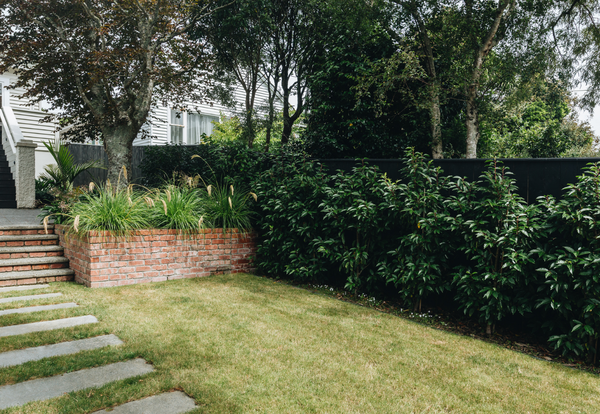
What is structure in the garden and why is it important? Structure in the garden are the permanent or evergreen elements that remain constant all year round. They provide a backdrop in the growing seasons for the plants that are more seasonal, that drop their leaves or go dormant in winter. These structural plants/elements come into their own in winter as the rest of the plants go to sleep, revealing the ‘bones’ of the garden. Structure ensures that the garden looks good in all seasons. There are different ways to incorporate structure into the garden. Evergreen plants are a great place to start. Include them in your planting scheme and if you are intentional in how and where you use them you can give the garden a sense of order and tie the different spaces together. Creating hedges at different heights can frame and define different spaces. They can create a sense of mystery when you can’t see every area of the garden at once. Using the same plant spaced along a pathway or border can draw your eye to a feature or encourage you to walk along the path. Topiary or clipped evergreens can be used in pairs to mark an entrance or in the garden or in pots as a focal point. Even deciduous plants (those which drop their leaves in winter) if used in an intentional or repetitive fashion can be used to create structure in your garden. While many of the examples pictured are clipped and formal, if you prefer a loose, organic feel, the same principles apply. Many grasses or strappy foliage plants are evergreen and can be swapped in for shrubs. Hard landscaping elements can also be used to create structure in the garden. Whether they are made from timber, stone, brick, metal or some other material, they will create a backdrop for the garden in spring, summer and autumn and become features in winter. Archways, obelisks, plinths, pots, gazebos, sculptures, water features, plant supports, even raised garden beds and pathways are all ways to add structure to a garden. Combine these with evergreen plants and you have a garden that looks good in every season. Written for Gubba by Kelly Jean Reyland from Garden Advice NZ (www.gardenadvice.co.nz)

