

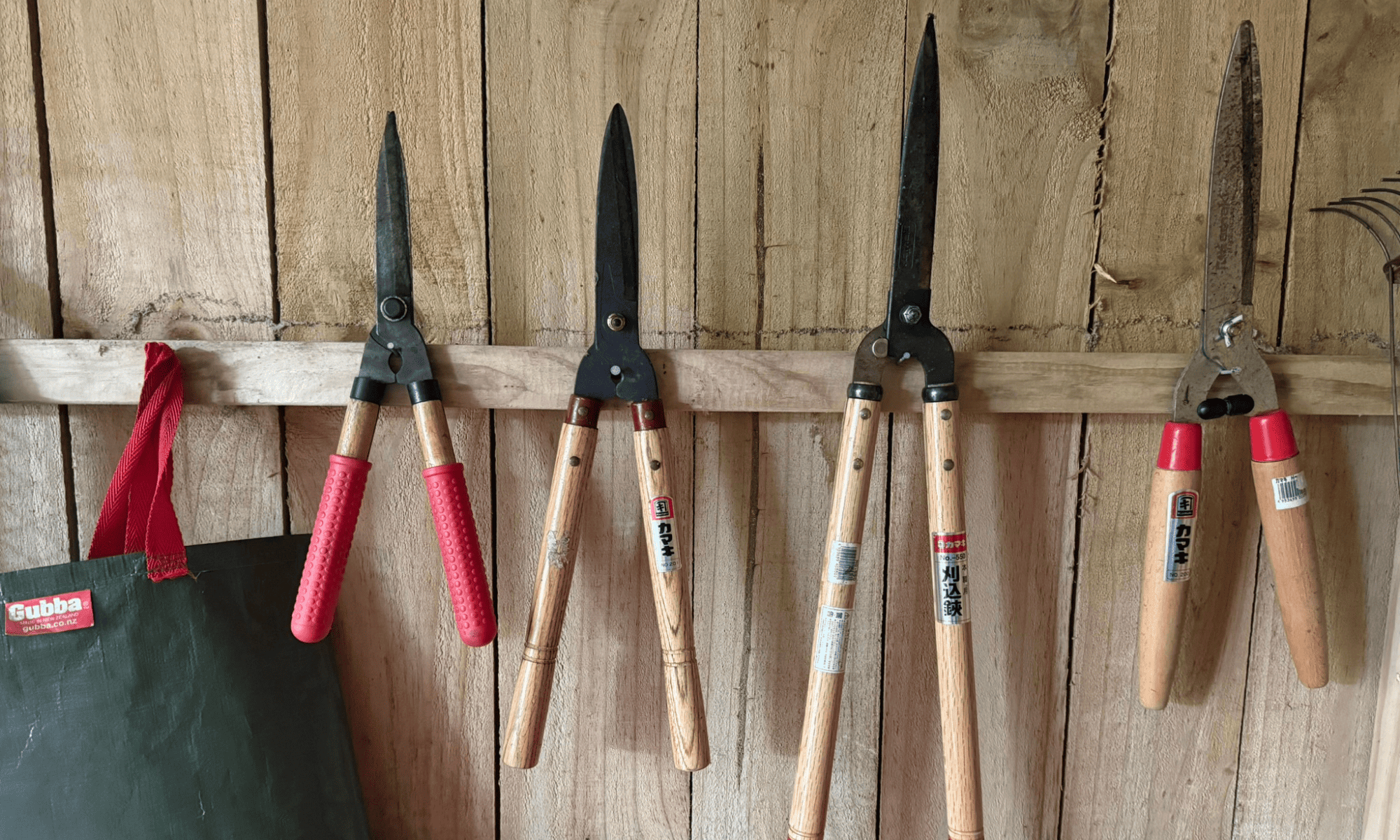
There are few jobs in the garden as quietly satisfying as clipping a hedge by hand. The crisp edge, the rhythmic snip, the slow reveal of a clean line. A good pair of hedge shears is what gets you there, and a bad pair turns the whole thing into a chore.
Power trimmers have their place, but for most hedges the humble hand shear still wins on control, finish and sheer pleasure. No cord, no fumes, and you can hear the birds while you work. Here is how to choose a pair that lasts, and how to use them well.
Why hand shears beat the trimmer (for most hedges)
For a formal buxus edge, a lonicera run, or any hedge where the finish matters, hand shears give you a level of control a trimmer simply cannot. You see every cut. You can follow a curve, sharpen a corner, and stop the moment the line is right. They are quieter, lighter to store, cost less, and never need charging or fuel.
A powered trimmer earns its keep on long boundary hedges and big seasonal cut backs. But for the regular tidy up that keeps a hedge looking its best, reach for the shears.
Hedge shears, topiary shears, or one hand shears?
Not all shears do the same job. Choosing the right shape saves you a lot of effort.
Hedge shears are the two handed classic: long straight blades and long handles for flat faces and formal lines. Best for box hedging, formal edges, and keeping a run sharp.
Topiary and sheep shears are lighter, often one handed, with shorter blades for shaping balls, spirals and detail. Best for topiary, small specimens, and anywhere you need a delicate hand.
One hand shears and snips handle soft growth, grass edges and quick touch ups. Best as a companion, not your main hedge tool.
Most gardeners with a formal hedge want a proper two handed pair, and add a topiary shear if they grow shapes.
What to look for
- Blades that hold an edge. Quality steel sees you through a whole hedge without dragging or tearing. A light non stick coating helps the blades glide and shrugs off sap.
- A weight you can swing. Hedge cutting is repetitive. Light enough to work along a full run before your arms file a complaint, but solid enough to cut cleanly.
- Comfort that lasts the job. Shock absorbing buffers between the handles save your wrists and elbows on the long edges. Comfortable grips matter more the bigger the hedge.
- The right blade for the work. Straight blades for flat faces and formal lines. A wavy or notched section near the base helps grip and cut thicker stems without them sliding out.
- Made to last. Buy once, buy well. A good pair, kept sharp, outlives a decade of cheap ones.
Browse the full range in Shears & Loppers.
How to use them well (and keep a straight line)
Keep the blades flat against the face of the hedge and let the tool do the work, rather than chopping at it. For a straight run, set up a string line or lay a batten along the top as a guide, then cut to it. Do the sides before the top so clippings fall away as you go.
One trick the pros swear by: taper the sides so the hedge is very slightly wider at the base than the top. This lets light reach the bottom, which keeps the whole hedge dense and green instead of going bare and leggy down low.
And the golden rule: clip little and often. Light, regular trims keep the shape tight and the plant dense, and they are far easier than wrestling an overgrown hedge back into line once a year.
Caring for your hedge shears
Wipe the blades down after every session. Sap is the real enemy, not wear, and it sets hard if you leave it. A drop of oil on the pivot and along the blades keeps the action smooth and rust at bay. When the cut starts to drag, touch up the bevelled edge on a sharpening stone. Treated well, a good pair of shears is a buy once tool.
Quick FAQ
Are hand shears better than a hedge trimmer?
For most hedges, yes. Hand shears give more control and a cleaner finish, with no cord or fuel. A powered trimmer is better for very long boundary hedges and big seasonal cut backs.
How often should I cut my hedge?
Little and often beats once a year. Light trims through the growing season keep the shape tight and the plant dense, and they are far easier work.
How do I keep my hedge green at the bottom?
Taper the sides so the hedge is slightly wider at the base than the top. This lets light reach the lower growth and stops it going bare and leggy.
Ready to get clipping? Shop Shears & Loppers. Planting a new hedge first? Start with our guide to the 10 best hedges and screening plants.


