

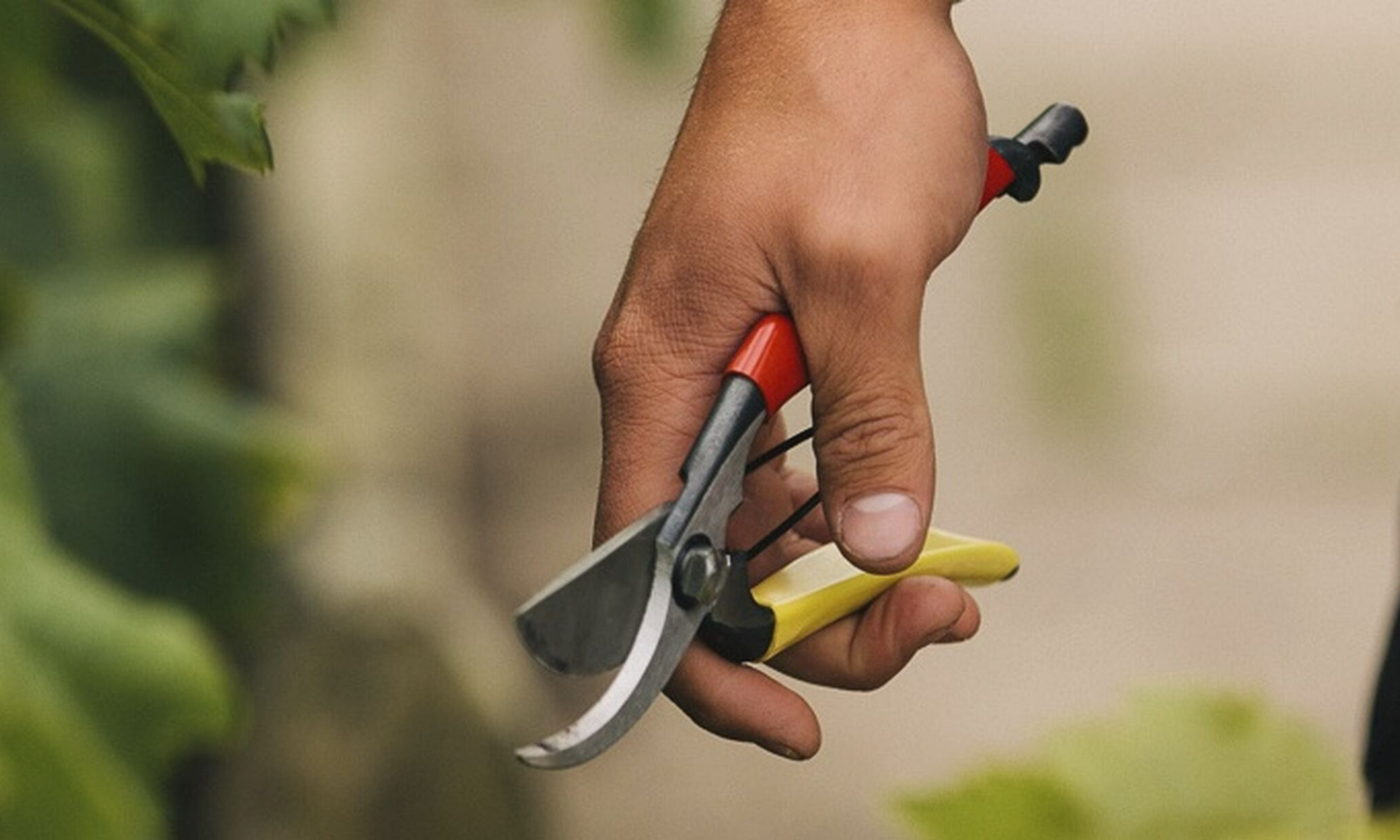
Decades. That's how long a great pair of secateurs should last. Used well, cared for properly, they'll outlast gardens, seasons, and a lot of bad advice.
If you have ever tried to prune with a blunt, ill-fitting, or wrong-type-for-the-job pair of secateurs, you already know the difference quality makes. The right pair feels like an extension of your hand. The wrong pair feels like an argument with your garden.
Here is what you need to know before you buy.
Bypass secateurs
The most common type, and the best choice for most gardeners. Bypass secateurs work like scissors, two blades pass each other to make the cut. This gives you a clean, precise cut that does minimal damage to the plant tissue.
Best for: live stems, green growth, flowers, soft to medium-thickness branches.
Look for: good quality steel that holds its edge, comfortable grip that fits your hand, and a smooth bypass action with no wobble at the pivot.
Anvil secateurs
Anvil secateurs have a single sharp blade that presses down onto a flat anvil plate. They generate more cutting force, which makes them useful for tougher, woodier material. But they crush rather than slice, which can bruise soft plant tissue.
Best for: dead wood, thick woody stems, hard pruning where plant cosmetics are less important.
Worth knowing: if you have arthritis or reduced grip strength, anvil secateurs require less hand force to make the same cut. Worth considering.
Ratchet secateurs
A variation on the anvil type, ratchet secateurs let you close the blade in small increments rather than one motion. Each squeeze advances the blade a little further, so you can cut through thick stems without needing to squeeze hard all at once.
Best for: people with limited hand strength, repetitive-strain issues, or anyone doing a lot of hard pruning in one session.
Japanese-style secateurs
Traditional Japanese secateurs are a different shape entirely — lighter, more refined, with blades designed around Japanese steel craft. They tend to be supremely sharp out of the box and reward careful maintenance. Many Japanese gardeners consider them the only secateurs worth owning.
Best for: precision work, flower arranging, light to medium pruning, gardeners who appreciate a finely made tool.
Worth knowing: Japanese-style secateurs often have a separate locking ring rather than a squeeze-lock. Takes a moment to get used to, then you will wonder why all secateurs are not made this way.
Snips
Snips are smaller, single-handed cutters designed for light work — deadheading flowers, harvesting herbs, cutting ties and twine, trimming soft growth. They are not a replacement for secateurs but an excellent companion. Keep a pair in your apron pocket.
How to choose the right size
Secateurs come in different sizes, and size genuinely matters. A pair that is too large for your hand means your fingers cannot close fully around the grip, which is both tiring and imprecise. Too small and you lose leverage.
If possible, hold the secateurs before you buy. Your fingers should close comfortably around the grip with the blade fully open, without stretching or cramping. Many quality brands offer models in different sizes for this reason.
Left-handed secateurs
Yes, these exist. If you are left-handed and have always wrestled with standard secateurs, the problem is not you — it is the tool. Left-handed models are designed with the blade orientation reversed so the cut line is visible to a left-handed user.
What to spend
A quality pair of secateurs is one of the most used tools in your garden. It is not the place to cut corners. A well-made pair, maintained properly, will last a decade or more.
Explore the full secateurs range at bugg.co.nz/collections/pruners-secateurs.


