

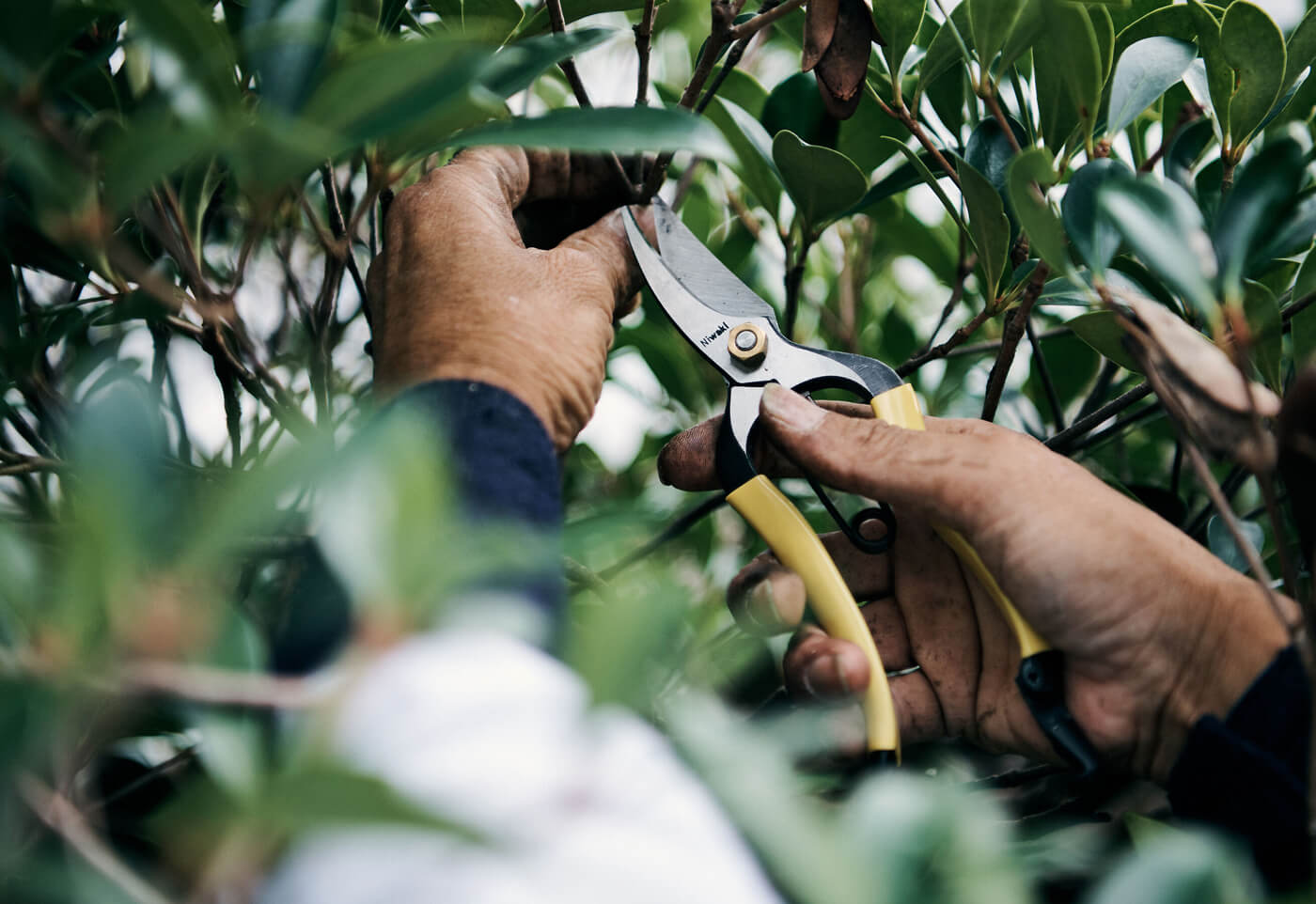
Let's be honest. Winter feels like the off-season, but it's actually your garden's most important appointment of the year. While everything looks dormant and a bit sorry for itself, this is the window where your decisions shape the next twelve months of growth, fruit, and flowers.
Pruning in winter isn't optional maintenance. It's the single most impactful thing you can do for the health, structure, and productivity of your garden. And doing it well comes down to two things: timing and tools.
Why Winter? Because Your Plants Are Asleep (And That's the Point)
Deciduous trees and roses drop their leaves and go dormant over winter for a reason. Their energy retreats below ground, sap stops flowing, and the bare framework is finally visible. This is your chance to see the structure clearly, make clean cuts without stressing the plant, and set up strong new growth for spring.
Pruning during dormancy reduces the risk of disease entering through fresh wounds, because most fungal spores are less active in the cold. It also means the plant can channel all its spring energy into the growth pattern you've chosen, rather than wasting it on crossing branches, dead wood, or weak stems heading nowhere productive.
In most parts of New Zealand, the pruning window runs from June through to mid-August. Warmer regions like Auckland and Northland can start earlier. Colder spots like Canterbury and Otago are better waiting until late July or August, after the worst frosts have passed. The rule of thumb: prune on a clear, dry day. Damp conditions increase the risk of fungal infection through fresh cuts.
What to Prune in Winter
Roses
The big one. Roses bud on new wood in New Zealand, which means winter pruning directly dictates your spring flower display. The goal is to remove dead, diseased, and crossing branches, open up the centre for airflow and light, and encourage strong outward-facing growth.
Cut back main canes by roughly half, always cutting at a 45-degree angle just above an outward-facing bud. Remove any spindly, weak growth entirely. You want three to five strong canes left in an open vase shape. Climbing roses are slightly different: keep the main structural canes and cut back the side shoots that flowered last season to three or four buds.
The tool: A sharp pair of bypass secateurs is non-negotiable here. The Okatsune Bypass Pruners 200 ($99.90) are the gold standard for rose work, forged in Hiroshima with high-carbon steel blades that make clean, precise cuts without crushing the stem. For smaller hands, the Okatsune Bypass Pruners 180 ($89.90) offer the same quality in a more compact frame. And if you have larger hands or thicker canes, the Bypass Pruners 210 ($109.90) are your match.
For those who want Japanese artisan-level precision, the Niwaki GR Pro Secateurs ($234-$248) are a cult favourite for a reason. Drop-forged in Sanjo, Japan, they're the kind of tool you'll still be reaching for in twenty years.
Deciduous Fruit Trees
Apples, pears, and stonefruit all benefit from a winter prune, though each has its own approach.
Apples and pears produce fruit on older wood and short spurs. A moderate winter prune maintains an open, balanced structure so fruit gets good light and airflow, and branches are strong enough to carry a heavy crop. Remove any dead, diseased, or crossing branches first, then thin out overcrowded spurs and shorten last season's growth.
Stone fruit (peaches, nectarines, apricots) fruit on last season's new wood, so pruning encourages fresh growth where the next crop will form. Train into an open vase shape for maximum sunlight penetration.
A note on plums: Many NZ gardeners prune plums in winter by habit, but plums are actually better pruned in late summer. Winter pruning opens fresh wounds during peak silver leaf disease season (June to August), which can cause serious damage. If you must tidy a plum in winter, keep it minimal and seal cuts with pruning paste.
The tools: Secateurs handle branches up to about 15mm. For anything thicker, step up to loppers. The Nishigaki Branch Lopper N-152 ($162) and N-153 ($158) are clever long-reach loppers with a steel rod mechanism that gives you serious cutting power without serious effort. The Kanenori Japanese Garden Loppers ($178) are a more traditional option with forged carbon steel blades and white oak handles, built for gardeners who appreciate heritage craftsmanship.
For branches your secateurs and loppers can't handle, a pruning saw is essential. The Elephant Tools Folding Pruning Saw 210 ($54) comes in both fine and large teeth options. Fine teeth for precision cuts on smaller branches, large teeth for faster work on thicker wood. They fold for safe, pocket-friendly carrying.
Hedges
Winter is prime time for a structural tidy of deciduous and semi-evergreen hedges. The goal isn't precision topiary (save that for the growing season), but establishing a clean framework and removing any dead or wayward growth.
Keep the top of your hedge slightly narrower than the base so lower branches get adequate light. This prevents the classic bare-at-the-bottom look that plagues neglected hedges.
The tools: Hedge shears are the workhorse here. The Kamaki Hedge Shears 201 ($88) are a best-seller for good reason: lightweight, balanced, and sharp enough to make clean cuts without tearing. For longer hedges, the Kamaki Hedge Shears 550 ($139) offer extended reach. The Okatsune Hedge Shears 217 ($178) are the premium choice, and the Niwaki Japanese Garden Shears ($228) are for those who treat topiary like high art.
For smaller-scale shaping and detailed topiary work, the Niwaki Mini Shears ($166) give you precision control without the bulk.
Hydrangeas, Grape Vines, and Everything Else
Hydrangeas (mophead and lacecap varieties) bloom on old wood. Prune back to the first pair of fat, healthy buds below last season's flower head. Remove any dead or weak stems entirely.
Grape vines need hard pruning to produce well. Cut back last season's growth to two or three buds on each spur. This feels brutal, but vines are vigorous growers and will thank you with a better crop.
Wisteria, ornamental grasses, and perennials can also be cut back in winter to encourage strong spring regrowth.
The Right Cut Makes All the Difference
A ragged, torn cut invites disease. A clean, angled cut heals quickly and directs growth where you want it. This isn't about the gardener's skill alone. It's about the blade.
Dull, cheap secateurs crush stems instead of cutting them. The plant is left with a bruised wound that takes longer to heal and is far more susceptible to fungal infection. A sharp, well-made bypass secateur slices cleanly through the stem, leaving a smooth surface that calluses over quickly.
This is why we stock the tools we stock. Every pair of secateurs, every pruning saw, every set of shears at bugg® has been chosen because it makes clean cuts, holds its edge, and feels right in the hand. From the entry-level Kamaki Pruner P900H ($29.90) right through to the hand-forged Tobisho SR-1 Secateurs ($218-$228), every tool earns its place.
Don't Forget to Protect Yourself
Pruning roses without proper arm protection is a rite of passage nobody needs to repeat. The Lynn River Rose Pruning Sleeves ($21.90) cover your forearms from wrist to elbow and save you from the "rose tattoo" of scratches that come with a serious pruning session.
And if you're spending any real time in the garden this winter, a good pair of gloves and a tool pouch to keep your secateurs, snips, and saw within arm's reach will save you countless trips back to the shed.
The Winter Pruning Checklist
- Start with the dead, diseased, and damaged. Remove any branches showing signs of disease, dieback, or insect damage.
- Remove crossing and rubbing branches. Where two branches are competing for the same space, keep the stronger one.
- Open up the centre. Airflow and light prevent disease and improve fruit quality.
- Shape for the future. Think about where you want next season's growth. Every cut you make directs the plant's energy.
- Clean your tools between plants. A quick wipe with methylated spirits between different trees or bushes prevents you from spreading disease from one plant to another.
- Make every cut count. Angle your cuts at 45 degrees, just above a bud or branch collar. Don't leave stubs, and don't cut flush.
Shop the Winter Pruning Edit
All the tools mentioned in this guide are available at bugg.co.nz. Here's the quick-reference lineup:
Secateurs: Okatsune Bypass Pruners 180 / 200 / 210, Niwaki GR Pro Secateurs, Higurashi GR Secateurs, Ken-Katabami Bypass Secateur S200, Kamaki Pruning Shear 888, Tobisho SR-1 Secateurs
Shears: Kamaki Hedge Shears 201 / 550, Okatsune Hedge Shears 217, Niwaki Japanese Garden Shears, Niwaki Mini Shears
Loppers: Nishigaki Branch Lopper N-152 / N-153, Kanenori Japanese Garden Loppers
Saws: Elephant Tools Folding Pruning Saw 210 (Fine Teeth / Large Teeth)
Protection: Lynn River Rose Pruning Sleeves
Carry: 3 Pocket Tool Pouch, Niwaki Single Holster, Zenbu Pouch, Tool Pouch - Denim, Tool Pouch - Khaki
Winter is the season your garden is counting on you. The right cuts now mean better roses, heavier fruit crops, and healthier plants come spring. And the right tools make every cut worth making.


