

The difference between a sharp tool and a blunt one is the difference between gardening and suffering.
A sharp blade cuts cleanly. It slips through a stem the way it should, leaving a tidy wound that heals fast. A blunt blade tears, crushes, and bruises, and that damage is an open invitation for disease. If your secateurs are leaving ragged cuts or your spade is bouncing off the soil, it is not the tool's fault. It just needs sharpening.
The good news: sharpening your tools is easier than most people think, and the results are immediate. Here is how to do it.
What you need
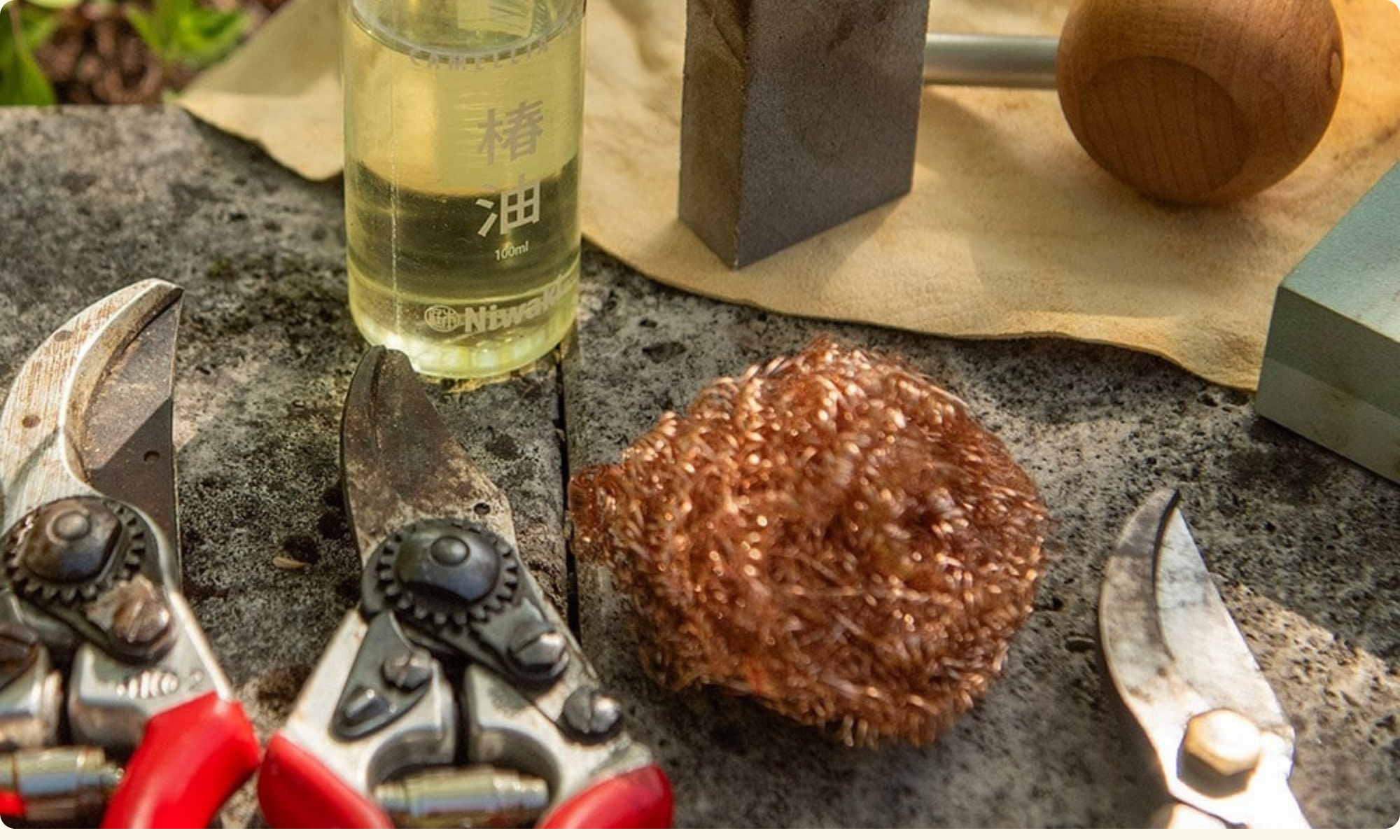
A quality sharpening setup does not need to be complicated. For most garden tools, you need three things: a sharpening stone (the 1000 grit whetstone for regular maintenance), a diamond file or honing rod for quick touch-ups in the field, and Camellia oil or water to lubricate the stone while you work.
For rust removal before you sharpen, a Rust Eraser does the job brilliantly, pumice-like, satisfying, and surprisingly effective on carbon steel blades.
Sharpening secateurs and snips
Secateurs are the tool you use most. They deserve the most care.
Start by cleaning the blade. Wipe off any sap or grime with a cloth. If there is surface rust, work the Rust Eraser along the blade before you pick up the stone.
With your whetstone slightly dampened, hold the blade at the same angle as the original bevel — usually around 20 to 25 degrees. Glide the stone along the cutting edge in smooth strokes, working from the base of the blade toward the tip. Count your strokes and keep them even. Eight to ten strokes is usually enough for regular maintenance.
Only sharpen the flat bevel side. The flat back of the blade stays flat, a few light passes on a flat stone to remove any burr is all it needs there.
Wipe clean, apply a drop of Camellia Oil to the blade and pivot, and open and close a few times. You should feel the difference immediately.
Sharpening loppers and shears
Same principle, bigger blade. Hold the tool steady, clamping it in a vice if you have one makes life easier. Work the stone along the bevel in the same way, keeping a consistent angle. Hedge shears often have a slight hollow grind; trace it faithfully.
After sharpening, check the tension screw on your loppers. A well-sharpened blade that is too loose will still cut badly. Tighten until there is resistance but no binding.
Sharpening spades, hoes, and forks
These tools take much more force in use, so they dull faster and need more metal removed. A flat file or diamond honing tool works better than a whetstone here.
For spades: file along the inner edge of the blade, following the original bevel. Work in long, smooth strokes away from your body. You are aiming for a thin, sharp edge not a razor, but something that will cut into soil cleanly rather than smash through it.
For hoes: same approach. A sharp hoe slices weed stems at the soil line. A blunt one just pushes them sideways and they come back.
How often should you sharpen?
After every few serious sessions, or any time you notice your tools dragging or tearing rather than cutting. Secateurs used daily in spring and autumn can benefit from a quick touch-up every week or two.
The ritual of it matters too. Coming in from the garden, wiping down your tools, running a stone along the blade, it is five minutes that pays back every time you use them.
Finish with oil
Once sharp, wipe a thin layer of Camellia Oil across every metal surface. This keeps rust away, lubricates pivot points, and keeps wooden handles from drying out. It is the final step that makes everything feel right.
Browse our full tool maintenance range at bugg.co.nz/collections/tool-maintenance.


