

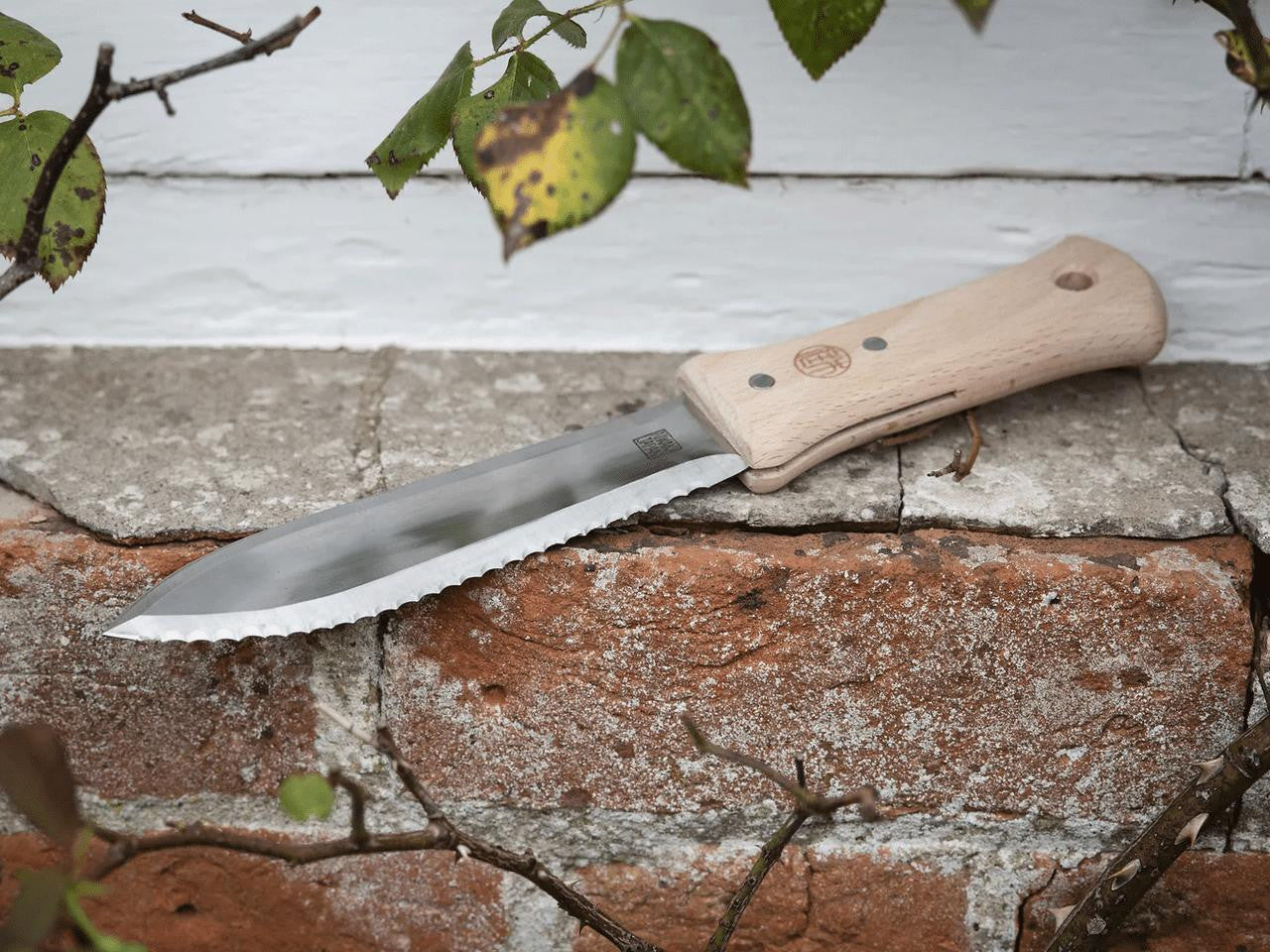
If you could only take one tool into the garden, a serious case can be made for the hori hori. Part knife, part trowel, part saw, it is the Japanese soil knife that quietly replaces half the contents of your shed. The name roughly translates as "dig dig", which tells you most of what you need to know.
Here is what it actually does, how to use it well, and how to choose one that lasts.
What is a hori hori?
A hori hori is a heavy, slightly concave blade with a sharp point, one straight cutting edge and one serrated edge, usually set into a wooden or moulded handle. Most have depth measurements stamped along the blade so you can plant bulbs and seedlings to the right depth without guessing. It is a digging tool and a cutting tool in one hand.
12 jobs a hori hori does
- Digging planting holes for bulbs, seedlings and small plants
- Weeding, including levering out taprooted weeds like dandelions
- Dividing perennials and clumping plants
- Transplanting seedlings and self-sown volunteers
- Cutting through roots and tough stems with the serrated edge
- Opening bags of mix and compost
- Measuring planting depth using the marked blade
- Cutting twine and opening packaging
- Scooping and back-filling soil
- Harvesting root veg and cutting lettuces and leeks at the base
- Edging beds and tidying borders
- Slicing through turf when planting into lawn
How to use it safely and well
Hold it like you mean it, with the blade angled into the soil and your weight behind it. For weeding, drive the point in alongside the root, lever back, and the whole thing lifts. For dividing, push the blade straight down through the clump and rock it. Use the serrated edge for roots and the straight edge for clean cuts and slicing.
Two habits keep you safe: cut away from your body, and sheath it when you are not using it. The point is genuinely sharp, which is exactly why it is so useful.
How to choose a hori hori
- Blade material. Stainless steel resists rust and needs less fuss. Carbon steel holds a keener edge but wants drying and a wipe of oil. Both are excellent; it is a maintenance choice.
- Full tang. A blade that runs the full length of the handle will not loosen or snap under leverage.
- Comfort. You will hold it for hours, so the handle should sit well in your hand.
- A sheath. Worth having to protect the edge and your shins, and it clips neatly onto a tool pouch.
Our hori horis at a glance
| Hori hori | Steel | Blade | Comes with | Best for | Price |
|---|---|---|---|---|---|
| Nisaku Hori Hori 110mm | Stainless | 110mm | Sheath | Pots, tight spots and borders planted a little too densely | $49.90 |
| Nisaku Hori Hori 170mm | Stainless | 170mm | Sheath | Digging, weeding, planting, and quietly retiring your trowel | $59.90 |
| Ken-Katabami Hori Hori | 420J2 stainless | 130mm Small, 180mm Large | White leather sheath with belt loop | Planting bulbs at exactly the right depth (we see you). Marked in cm and inches | $59.90 Small $74.80 Large |
| Niwaki Hori Hori and Canvas Holster | Carbon steel, full tang | 167mm | Canvas holster | Gardeners who want it on their hip at all times | $96.00 |
| Niwaki S-Type, Small | Stainless | 87mm | Sheath sold separately | Succulents treated like royalty, seedlings treated like heirs | $128.00 |
| Niwaki S-Type, Standard | Stainless | 170mm | Sheath sold separately | Everyday planting and weeding, and looking good doing it | $178.00 |
Browse the full Hori Hori collection to compare blade lengths and steels.
Caring for your hori hori
Knock the soil off after use and dry it. If it is carbon steel, wipe the blade with a light oil before it goes away. Touch up the cutting edge on a sharpening stone when it starts to drag. Treated well, a good hori hori is a buy-once tool.
Quick FAQ
What is a hori hori knife used for?
Digging, weeding, planting, dividing, cutting roots and harvesting. It is a combined digging and cutting tool that replaces a trowel, weeder and small saw.
Is a hori hori better than a trowel?
For most jobs, yes. It digs like a trowel but also cuts, levers out weeds and measures planting depth, so it does several jobs a trowel cannot.
Stainless or carbon steel hori hori?
Stainless is lower maintenance and rust-resistant; carbon steel takes a sharper edge but needs drying and oiling. Choose by how much upkeep you enjoy.
Find your one tool to rule them all in the Hori Hori collection.


