

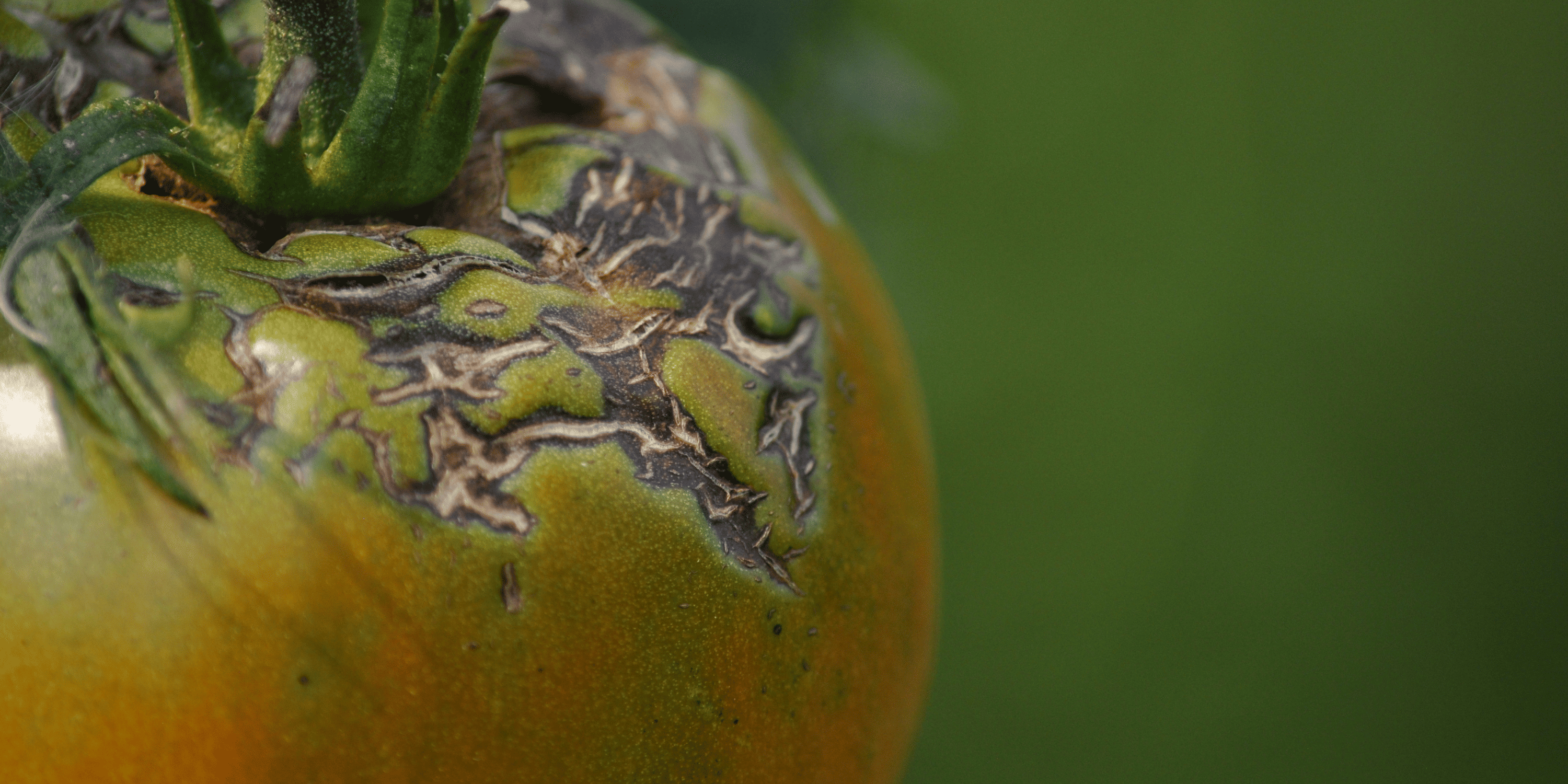
Why your tomatoes keep splitting
You walk out to the garden, ready to harvest. Instead you find half your beautiful tomatoes have split open. Sometimes the splits are deep gashes running from stem to blossom end. Sometimes a ring of concentric cracks at the top. Either way, ants and slaters are halfway through dinner already.
It's not a disease. It's not a pest. It's water.
The mechanism
Tomatoes split when the inside of the fruit grows faster than the skin can stretch.
The fruit is mostly water. When the plant gets a big drink (heavy rain after a dry spell, deep watering after letting it dry out), the roots pump water into the fruit fast. The flesh swells. The skin can't keep up. It splits.
Two main types of split:
- Radial splits: long cracks running from the stem down the fruit. Caused by extreme rapid swelling.
- Concentric cracks: rings of cracks circling the stem end. Caused by lower-grade but more chronic water stress.
Cherry and large heirloom tomatoes are the most prone. Roma, paste, and smaller modern varieties less so.
The fix: consistent watering
The single biggest factor in splitting is irregular watering. Your tomatoes don't care about the total volume. They care about the consistency.
The rule: water deeply and regularly through the fruiting phase. Don't let the soil dry out completely between waterings. Don't suddenly drench a thirsty plant.
In practice:
- Water deeply twice a week in normal weather. Three times in hot dry spells.
- Aim for a soak that reaches 20cm down.
- Mulch heavily to even out moisture (8 to 10cm of straw or pea straw).
- Avoid the 'watering when I remember' pattern. Set a calendar reminder if you have to.
Heavy rain after a dry spell
This is the classic split scenario. You went on holiday for a week. The plants didn't get watered. They came back to half a litre of rain. The fruit swells. The skin pops.
You can't always prevent this, but you can mitigate it:
- Mulch deeply before you leave
- Set up a soaker hose on a timer if you're away often
- Use self-watering pots or olla pots for containers
- Cover the bed with a temporary structure during heavy rain if a storm is forecast and the fruit is at the vulnerable ripening stage
Other contributing factors
Beyond watering, a few other things make splitting worse:
- Over-fertilising in late season (rich soil and sudden water equals burst fruit)
- Pruning too aggressively (suddenly the remaining fruit gets all the water and nutrients)
- Varietal susceptibility (cherry tomatoes are the worst, beefsteaks middle, paste tomatoes the most resilient)
- Picking too late in the ripening stage (ripe fruit on the vine is more prone to splitting than under-ripe)
What to do with split tomatoes
Use them within 24 hours. Splits invite mould, ants, and rot.
If they're freshly split and the skin is clean:
- Eat fresh in salad, on toast, or with pasta
- Cook into sauce immediately
- Roast on a tray with olive oil and garlic
- Freeze whole for winter cooking
If they've been open for a day or more, check for mould and slaters before using.
Varieties that split less
- 'Roma' (paste type, thick skin)
- 'Russian Red' (heirloom but tough-skinned)
- 'Money Maker' (classic English variety, reliable)
- 'Mountain Pride' (modern split-resistant breed)
- 'Celebrity' (F1 hybrid, very split-resistant)
The trade-off: split-resistant tomatoes often have slightly thicker skins. They're better for sauce and storing, slightly less delicate for slicing.
The honest bit
Tomato splitting is the universe's way of telling you your watering rhythm is off. Mulch heavily, water consistently, and pick fruit just before fully ripe to avoid the worst of it.
Welcome to the dirt cult. We water on a calendar.


