

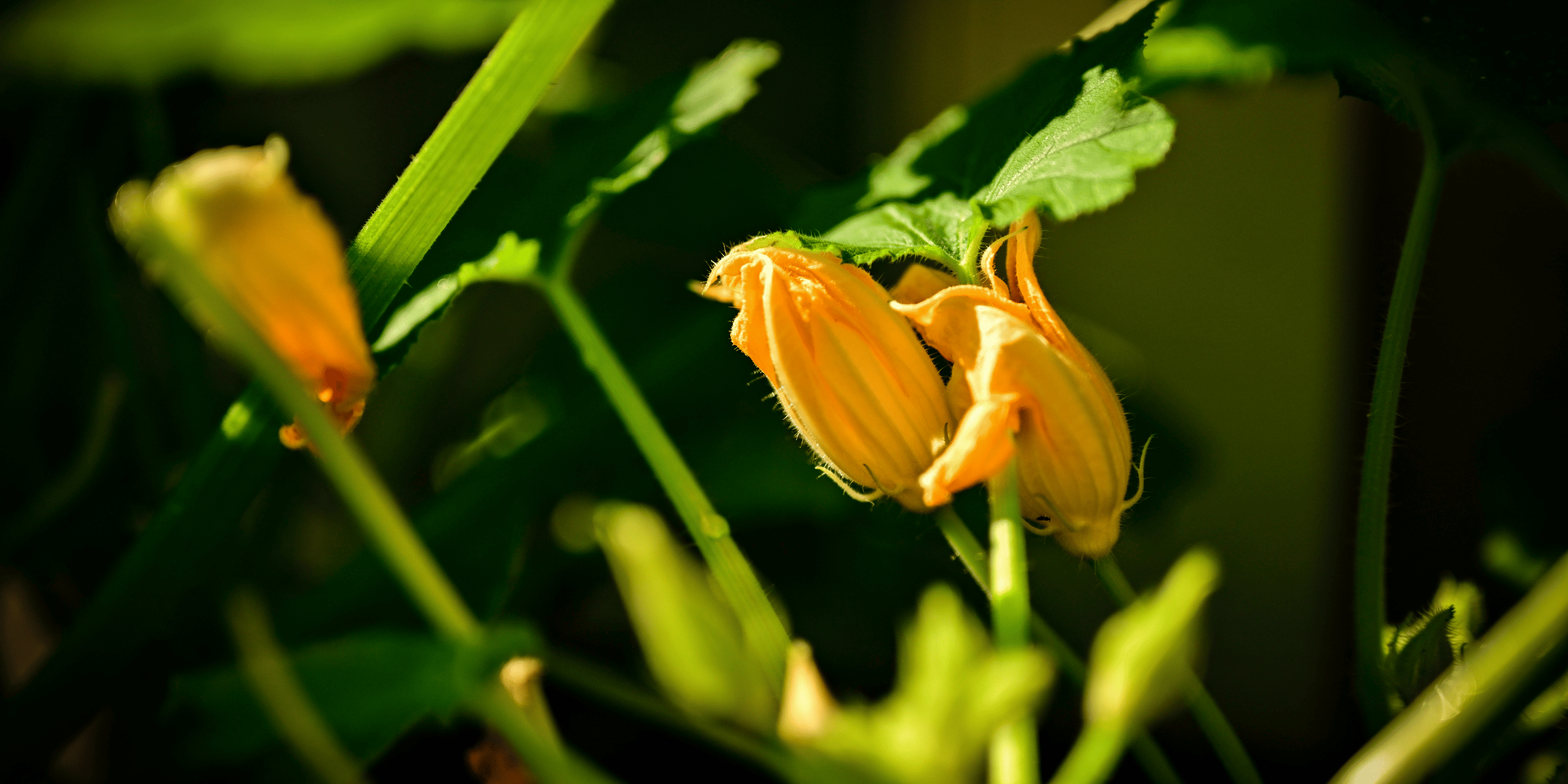
Loads of flowers, no fruit
It's a classic mid-summer panic. Your pumpkin, zucchini, or squash plant is covered in big yellow flowers. The plant looks healthy. The bees seem to be around. But weeks pass and the fruit just doesn't develop. Tiny baby zucchini turn yellow and drop off. Tiny pumpkin fruits shrivel.
The diagnosis is almost always the same: poor pollination. The fix is fast, free, and weirdly satisfying. You become the bee.
Why this happens
Squash family plants (pumpkin, zucchini, butternut, courgette, cucumber, melon) need pollen from a male flower to be transferred to a female flower to set fruit. Bees do this automatically when bee populations are healthy.
But pollination can fail when:
- Bee populations are low (rainy summer, urban environments, pesticide exposure)
- The flowers open in poor weather (cold mornings, persistent rain)
- The plant produced male flowers before female ones (normal for the first 1 to 2 weeks)
- The flowers open and close in a single day (squash flowers are short-lived)
If you keep losing baby fruits at the size of your thumb, it's pollination. Time to step in.
Male vs female flowers
Squash plants produce two types of flower. You need to know the difference.
Male flowers:
- Sit on a thin straight stem
- Have a small straight stamen in the centre covered in yellow pollen
- Open first in the morning, close by afternoon
- The first 1 to 2 weeks of a plant's life are almost all male flowers
Female flowers:
- Sit on a tiny baby fruit (a miniature zucchini, pumpkin, etc) just behind the flower
- Have a multi-lobed stigma in the centre, no pollen
- Open for a single morning, then close permanently
- If not pollinated within that window, the baby fruit shrivels
The mini-fruit behind the flower is the giveaway. Look for the swelling at the base.
How to hand-pollinate
The method is brutally simple. Do it in the morning, when both types of flower are open and fresh.
- Identify a male flower (slim stem, yellow stamen).
- Pick it. Or just leave it attached and bend it toward the female.
- Peel back the petals to expose the stamen.
- Find a female flower (the one with the mini fruit behind it).
- Touch the stamen of the male flower directly onto the stigma in the centre of the female. Brush gently. You're transferring pollen.
- Done. Move on to the next female.
You can pollinate multiple females with one male flower. One male flower has enough pollen for three or four females.
Backup methods
If you don't fancy plucking flowers:
- Use a small paintbrush or cotton swab. Dust the male flower's stamen to load up with pollen, then transfer to the female stigma.
- Cut a male flower in half and use one petal as a brush.
- Use a clean finger if you must (less effective but works in a pinch).
How to tell it worked
Within 24 to 48 hours, the female flower will close and the baby fruit behind it will start to swell visibly. By a week, it'll be obviously growing. If the baby fruit yellows and shrivels instead, the pollination failed. Try again.
What if there are no male flowers?
Sometimes a plant produces female flowers before any males open. Or all the males are spent. In this case:
- Borrow a male flower from a neighbouring plant of the same family (any squash will pollinate any other in the cucurbita family)
- Wait a day. Squash plants produce flowers continuously. Tomorrow there'll be more.
The bigger fix
If you're hand-pollinating every flower, it means your pollinators are missing. The longer-term fix is to plant more bee-attracting flowers near your veg patch. Borage, calendula, alyssum, phacelia, and lavender will pull bees in by the dozen.
A pollinator-rich garden doesn't need a human bee. But for now, you'll do.
The honest bit
Hand-pollination is the difference between an empty squash plant and a full harvest. Five minutes a morning, no tools, free. The first time a baby pumpkin actually develops because you intervened, it'll feel like a magic trick.
Welcome to the dirt cult. We're all bees now.


