

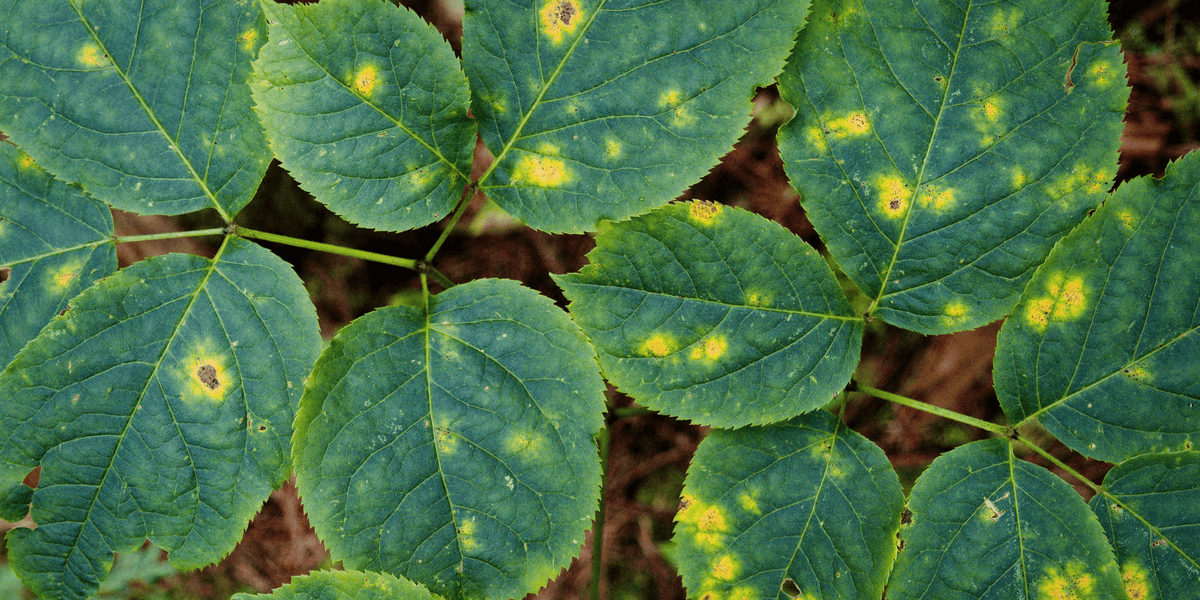
The mildew arrives before the tomatoes do
Spring is warm, damp and full of soft new growth, which is exactly the weather a fungus dreams about. Three of them turn up in New Zealand gardens every September with excellent timing: powdery mildew, rust and black spot. A fourth, damping off, goes for the seedlings on the windowsill before they have even made it outside.
None of them requires panic. Fungal disease is far easier to prevent than to cure, and prevention comes down to four habits: space, airflow, clean watering and removing the first infected leaf the day you see it. This guide covers how to tell the four apart, the kitchen sprays that hold up, and when to reach for copper.
This is the disease half of spring. The pests, aphids, slugs, the white butterfly and the birds, have their own guide.
Powdery mildew
It looks like someone dusted the leaves with flour, starting as small white patches and spreading until the whole leaf is grey. It loves crowded plantings and still, humid air, and it goes for sweet peas, dahlias, brassicas, cucumbers, courgettes and pumpkins. Unlike most fungi it does not need wet leaves, just humidity, which is why it shows up in a crowded bed even in a dry week.
The counter is airflow. Plant with room, thin hard, and take off the worst leaves so air moves through the plant. Then the kitchen spray: a teaspoon each of baking soda, vegetable oil and biodegradable dish soap in a litre of water, sprayed on both sides of the leaves weekly and never in the heat of the day. It changes the surface of the leaf so the spores cannot get a grip, and it protects the new growth coming through.
Rust
Orange brown freckling, usually on the undersides of leaves first, that rubs off on your fingers like rust from an old gate. It favours garlic, onions, leeks, roses and hollyhocks in warm damp weather. On alliums it matters more than it looks: once garlic leaves are heavily rusted the plant stops feeding the bulb, and the bulbs stop sizing up, so catch it early.
Remove and bin the rusted leaves, keep water off the foliage, and start the milk spray as soon as you see the first freckle: one part milk to five parts water, sprayed weekly. It is an old growers' trick that holds up, as a preventative and a slower rather than a cure, so it needs to start early. Do not plant alliums in the same bed two years running, the spores wait in the soil.
Black spot
Dark circles with yellow halos on rose leaves, and on young fruit trees, followed by the leaves dropping. The spores overwinter in fallen leaves under the plant and get splashed back up onto the new growth by rain, which is why the fix starts on the ground, in winter. Clear every fallen leaf from under the roses before the new leaves come, mulch so rain lands soft, and water at the base.
Once it is on the plant, pick and bin the spotted leaves as they appear. Never compost them. A home compost heap does not get hot enough to kill the spores, and you would be spreading next year's black spot yourself.
Damping off, the seedling killer
The one that strikes indoors. A tray of seedlings looks perfect on Monday, and on Wednesday they have keeled over at the soil line, stems pinched thin and brown. It is a soil borne fungus that thrives in cold, wet, still conditions, which is a fair description of most seed trays in September.
Prevention is everything, because there is no cure once a seedling has gone. Use fresh seed raising mix, not garden soil. Do not over sow, so air moves between the seedlings. Water from below and let the surface dry out between drinks. Keep them warm and in the light, and get a little air moving, a window cracked or a fan on low. If one seedling goes, take it out and its neighbours with it and let the tray dry out. Soil blocks, for what it is worth, get damping off far less than punnets, because every block has air around it.
Water the soil, not the show
Most fungal trouble travels by splash. Rain hits bare, infected soil, soil hits leaves, disease moves in. Three habits break that chain. Water at the base of the plant, not over the top, and in the morning so any splash dries fast. Mulch, so that rain lands soft instead of bouncing. And feed the soil rather than the leaf, because a plant growing in living, well fed soil has the vigour to resist what a hungry plant cannot. Compost, seaweed and an organic fertiliser in spring do more for disease resistance than any spray on this page.
When to reach for copper
When the weather is doing the splashing for you and the kitchen sprays cannot keep up, copper is the organic backstop for black spot, rust and the downy mildews. A fine particle copper hydroxide like Free Flo Copper sticks to the leaf through rain and keeps protecting, which means you use less of it than the old style coppers and put less on your soil. It is BioGro certified, mixes at two grams per litre, and has no withholding period, so you can spray the roses on Saturday and pick the beans on Sunday. Treat it as a backstop rather than a habit, follow the rate on the pack, and it stays a good organic tool.
For any of the sprays, the Solo hose-end sprayer takes the maths out of it: dial the ratio, pick the pattern, point. It takes a concentrate bottle or its own canister, so the kitchen recipes work in it too.
Spring diseases, the short answers
Can I compost leaves with black spot or mildew? No. A home compost heap does not reach the temperature needed to kill fungal spores, so you would be spreading the disease back onto the garden next year. Bin them.
Does the milk spray for rust actually work? As a preventative and a slower, yes. One part milk to five parts water, sprayed weekly on the foliage. It will not cure a badly rusted plant, so start it at the first freckle.
What is the baking soda recipe for powdery mildew? One teaspoon each of baking soda, vegetable oil and biodegradable dish soap in a litre of water, sprayed on both leaf surfaces weekly, out of direct sun.
Is copper spray organic? Copper hydroxide is approved for organic growing, and Free Flo Copper is BioGro certified. Use it as a backstop, not a habit, and follow the rate on the pack.
Why are my seedlings collapsing at the base? Damping off, a soil fungus that thrives in cold, wet, crowded trays. Fresh mix, bottom watering, warmth, light and airflow prevent it. There is no cure once a seedling has gone over.
What is the single most effective thing I can do? Space. Crowded plants trap the humid air that fungi need. Plant with room, thin your seedlings, and half of these problems never start.
The kit
- Free Flo Copper, BioGro certified copper hydroxide, 200g, $26.90
- Solo Hose-end Sprayer 405 HE, dial the ratio, pick the pattern, $32.90
- Soil Blocker Micro 20, the seed raising method that damps off least, $98.50
The rest of the spring defence is in the Grow collection.
Premium products for people who live in the garden.


