

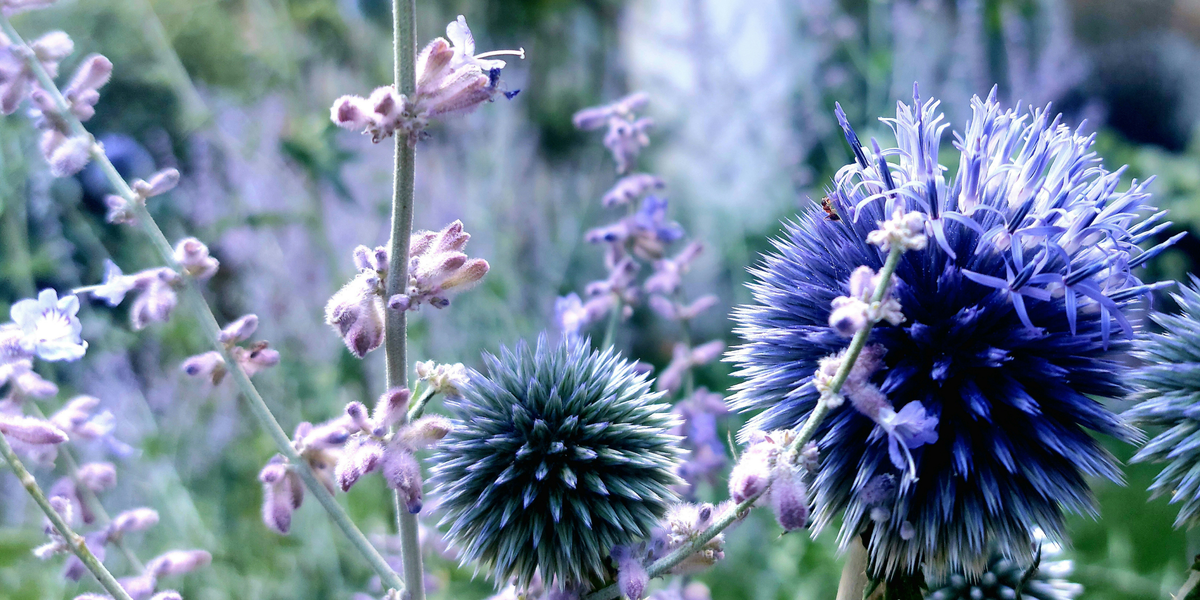
The trend forecasters have spoken, and the garden colour of 2027 is a deep, inky blue. The rest of the world gets to try it next year. We get to plant it this weekend.
What 'Ancient Blue' is
'Ancient Blue' is the colour of the year in the Garden Media Group's 2027 Garden Trends Report. It is a rich indigo, and the report traces it back to Egyptian blue, often described as the world's first synthetic pigment. The report pitches it as a turn toward deep, timeless colour and away from fads.
The report also claims true blue is rare, showing up in fewer than one in ten flowering plants. We would gently disagree. Anyone who has planted a blue border knows there are heaps to choose from, and the shortlist below is the proof.
Why New Zealand gets it first
The report is written for northern gardens heading into autumn. We are heading into spring. Anything you sow or plant in the next few weeks will be flowering while the northern hemisphere is still reading about it. For once, the time difference works in our favour.
1. Hydrangeas go first
The easiest big blue in a Kiwi garden is the one you may already have. Mophead and lacecap hydrangeas (Hydrangea macrophylla) turn blue in acidic soil, below about pH 6, because that is when the roots can take up aluminium. In alkaline soil the same plant flowers pink.
If yours are sulking pink or mauve, spring is the time to start. Water aluminium sulphate around the base now and again in autumn, and mulch with pine needles or bark to keep nudging the soil acidic. Go gently, because too much aluminium burns the roots. White hydrangeas stay white, and other species will not change at all. Our hydrangea colour guide has the full chemistry.
What to do: Test your soil, and if it sits above pH 6, water aluminium sulphate around your mopheads this spring and again in autumn.
2. Blue from a packet
Cornflowers are the classic. Sow them now, straight into the bed or into trays, about 15 to 20cm apart once the soil has warmed a little. Keep cutting them and they will keep coming.
Nigella, or love-in-a-mist, is the softer blue. Sow it where you want it to flower, because it dislikes being transplanted. Each plant has a short flowering window, so sow a little more every few weeks for a longer run. Leave a few seed pods at the end of summer and it will usually come back on its own. Both are hardy annuals, and our hardy annuals guide covers the basics.
What to do: Sow cornflowers and nigella straight into the bed now, and sow a little more every few weeks.
3. The blue shortlist
Beyond the packet, these are the blues we would plant this season. Some lean more violet than true blue, and we are not going to pretend otherwise.
For height and drama
Delphiniums. The tall, true blue of the lot. Plant seedlings in spring in full sun and rich, free-draining soil, stake them before they need it, and guard them from slugs and snails. They do best in cooler gardens. Every part of the plant is toxic, so keep them away from curious pets and small children.
Iris. Bearded irises bring deep blue and violet in late spring. Plant them in full sun with the tops of the rhizomes sitting at the surface, where they can bake. Dutch iris bulbs are the other route, planted in autumn for next spring. One iris to avoid: yellow flag iris is on the National Pest Plant Accord and cannot be sold or spread anywhere in New Zealand.
Echinops. Globe thistle: steel-blue spiky balls on long, strong stems. A frost-hardy perennial that flowers through summer, loved by bees, and brilliant cut or dried. Cut the heads for drying before they drop seed, because it has naturalised in places.
Sea holly. Eryngium bourgatii, the Mediterranean sea holly, has spiky leaves veined in silver and steel-blue, thistle-like flowers in summer. It is actually in the carrot family, not a thistle at all. Give it full sun and dry, free-draining soil, keep it away from paths because it is prickly, and cut a few heads to hang and dry.
Asters. The late-season blues. Lavender-blue asters such as Aster × frikartii 'Mönch' flower from late summer into autumn, just as everything else starts to fade. Plant them now in full sun and they will be settled long before they are needed.
Soft, low and scented
Forget-me-nots. A fact worth knowing: New Zealand has more than 45 native forget-me-not species, almost all found nowhere else, while six introduced European forget-me-nots are common garden weeds here. The garden star is the Chatham Island forget-me-not (Myosotidium hortensia), with big glossy leaves and clusters of blue flowers in spring. Give it cool, free-draining soil and dappled shade, and leave it where you put it, because it dislikes being moved.
Bluebells. Flowering right now in plenty of Kiwi gardens. English bluebells are the deep blue, scented ones with flowers hanging to one side. Spanish bluebells grow stronger and stand upright, and the two cross freely. The bulbs go in during autumn, so note where the gaps are now. For a native bell, look for the New Zealand harebell (Wahlenbergia albomarginata).
Hardy geraniums. Not the pelargoniums most of us grew up calling geraniums, which do not come in a true blue. Hardy geraniums such as 'Rozanne' flower violet-blue for months from late spring, and they are brilliant for knitting the front of a border together.
Scabiosa. Pincushion flowers in soft lavender-blue on long, wiry stems. Bees and butterflies love them, they are one of the best cut flowers going, and deadheading keeps them coming all summer.
Lavender. For the bluest tones, choose English lavender (Lavandula angustifolia) and its cultivars. Full sun, free-draining soil and a trim after flowering. Spanish lavender (L. stoechas) leans purple rather than blue, and it has naturalised in parts of New Zealand, so trim the spent heads before they seed.
Rosemary. The blue flowers are easy to overlook because the plant is so useful in the kitchen. It flowers through winter and spring, when there is less around for the bees, and it wants sun and dry feet.
Tweedia. Powder-blue star flowers that age to pink, on a scrambling plant from South America. It is frost tender, so treat it as an annual in cold areas and give it the warmest, sunniest spot you have. The stems bleed a milky sap that can irritate skin, so wear gloves when you cut it, and snip the seed pods before they split, because the fluffy seeds blow away.
What to do: Pick one tall blue for the back of the border and one low blue for the front, and match each to sun or shade.
4. Not those blues
Two plants on the global shortlist need a Kiwi second look.
Agapanthus. In Auckland you cannot sell, breed or distribute Agapanthus praecox, apart from low-fertility cultivars that Auckland Council has tested, such as 'Blue Finn', 'Blue Ice' and 'Thunder Storm'. Northland Regional Council also bans its sale, sterile varieties aside, and the Department of Conservation treats it as an environmental weed. If you want the look, choose a tested low-fertility cultivar, or plant turutu (Dianella nigra), which Weedbusters suggests as a native alternative. Lifting old clumps? Get the whole bulb-like base out, and a Hori Hori will reach the deep ones.
Lupins. Wild Russell lupin is a declared pest in Canterbury and Otago, where it invades braided rivers. It is pretty. It is also not our problem to make worse. Skip it.
While you are checking lists: blue morning glory (Ipomoea indica) is also on the National Pest Plant Accord, so leave that one on the fence where you found it.
What to do: Check your regional council's pest plant list before planting agapanthus, choose a tested low-fertility cultivar, or plant turutu instead.
5. Blue pots, hot flowers
Blue sits opposite orange on the colour wheel, which is why the pairing looks so good without trying. A glazed blue pot planted with orange calendula or nasturtiums looks deliberate from the first week, and both flowers are about as easy as it gets from seed.
What to do: Plant orange calendula or nasturtiums into a blue glazed pot and put it where you see it every day.
6. Blue for the bees
Bees see blue and violet especially well, which is part of why blue flowers are so busy on a warm afternoon. Borage and blue salvias are two of the best. Borage self-seeds with enthusiasm, so give it a corner where that is welcome. For more on planting for pollinators, read Kate Middleton Was Right.
What to do: Put borage and blue salvias where you can watch the bees work them, and let a few borage plants self-seed.
Blue in the kit
The colour does not have to stop at the plants. The Burgon & Ball Collector Hand Trowel in navy and Collector Hand Fork in blue look as good on the hook as they work in the bed. A Tubtrug in blue hauls the mulch. The Sakagen Flower Scissors come in navy. And our Limited Edition Denim Tote is proof that the blue most of us already live in counts too.
Keep reading
- How to Change Hydrangea Colour | The Chemistry Bit
- What Are Hardy Annuals? A Comprehensive Growing Guide
- Kate Middleton Was Right: Plant for the Bees, Not the Neighbours
Premium products for people who live in the garden.


